Alaska doesn’t play around when it comes to winter. From early-season storms to heavy wet snow and deep spring buildup, the weight adds up fast—and anything left outside has to withstand months of pressure. So it’s no surprise that one of the most common questions we hear is:
“Can shipping containers handle heavy snow loads?”
The short answer: Yes—when they’re in good condition and properly maintained, shipping containers can handle Alaska’s winter snow extremely well.
But like anything exposed to the elements, it helps to understand how they’re built, what they’re designed to support, and what you can do to keep them performing at their best through long winters.
Let’s break it down.
How Shipping Containers Are Built
Before shipping containers ever became storage units, workshops, or building shells, they were engineered for global transport. They’re designed to be stacked on cargo ships—sometimes eight or nine units high—while carrying tremendous weight.
A few key structural features explain why they’re so strong:
Corner Posts Do the Heavy Lifting
The four corner posts hold almost all the stacking load. That’s why containers can support over 300,000 pounds when stacked properly.
Corrugated Steel Walls Add Strength
The ridged steel walls help distribute stress evenly, especially during rough sea travel.
Steel Roof Panels Are Built for Compression
Roof panels are strong, but they aren’t meant to hold the same load as the corners. Their performance depends on condition and age.
Rigid Steel Frame
The frame ties the entire structure together, preventing flexing and bowing even under tough conditions.
In short, shipping containers were built to take abuse long before they ever reached an Alaskan driveway.
Snow Load Capacity — What Shipping Containers Can Really Handle
A well-maintained container can comfortably handle typical winter snow loads—even in snow-heavy areas of Alaska. But the roof’s strength is different from the corner posts.
Here’s what matters:
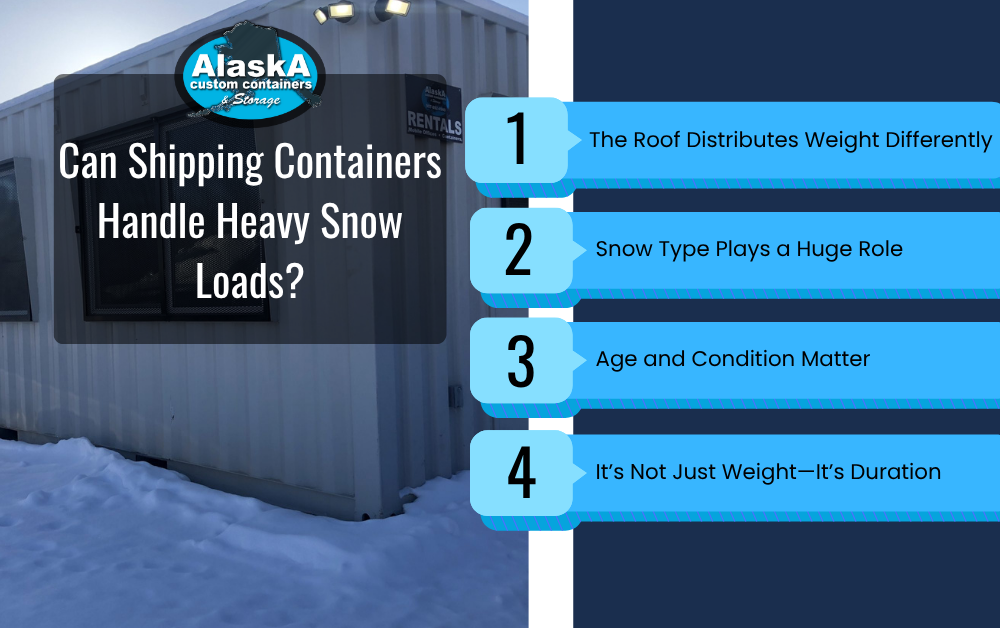
1. The Roof Distributes Weight Differently
Corner posts handle extreme vertical loads during stacking.
Roofs hold weight across a large, flat surface. That means dents, rust, or sagging can impact performance.
2. Snow Type Plays a Huge Role
- Light, dry powder: low weight
- Wet, heavy snow: much heavier
- Packed snow: weights multiply quickly
During a typical Alaska winter, the roof on a good-condition container can handle the load—especially if snow is cleared periodically.
3. Age and Condition Matter
A one-trip or newer container will naturally handle snow better than a container with rusted panels or roof dents that collect snow.
4. It’s Not Just Weight—It’s Duration
Months of freeze-thaw cycles can glue snow to the roof. This is when buildup becomes a concern.
So yes—shipping containers can handle heavy snow loads, but roof shape, condition, and maintenance make a difference.
Factors That Affect Winter Performance
Not all containers face winter the same way. These factors influence how well a container handles snow:
Container Condition
Dents, rust, or a bowed roof can trap snow and create weak points.
Roof Slope (or Lack of It)
Shipping container roofs are mostly flat. Without natural shedding, snow can accumulate.
Insulation and Heat Loss
A warm interior may melt the bottom layer of snow, creating ice sheets that refreeze—and add weight.
Snow Type & Storm Cycles
Wet snow can weigh more than double dry snow.
Wind Drift
On open land, wind can pile snow deep against one side or create uneven buildup on the roof.
Local Microclimates
Two properties a few miles apart can have completely different snow behavior.
Understanding these variables helps container owners make smart decisions before winter hits.
Best Practices to Make a Container Handle Heavy Snow
Alaskans rely on shipping containers for a reason—they hold up well in winter. But with a little preparation, they perform even better.
1. Keep the Roof in Good Condition
Avoid dents or “bowls” where snow collects. Even small depressions can accumulate heavy, wet snow.
2. Add Roof Reinforcements if Needed
Alaska Custom Containers can add internal or external support if your container needs extra protection.
3. Consider a Pitched Add-On Roof
A lightweight metal or wooden pitched roof sheds snow naturally and greatly reduces buildup.
This is popular for remote cabins or long-term storage.
4. Elevate the Container on Blocks or a Pad
Keeping the base off the ground prevents ice from trapping moisture and helps doors operate smoothly.
5. Clear Snow After Major Storms
Regular maintenance goes a long way. A quick brush-off after big storms prevents excessive weight.
6. Inspect After Freeze-Thaw Cycles
Look for ice dams, dips, or new areas where snow could begin collecting.
Small steps like these help your container handle winter with ease.
Realistic Expectations — What Shipping Containers Can and Can’t Do
Let’s clear up a few common misconceptions:
Myth: “Shipping containers can’t handle Alaska’s snow.”
Reality: A good-condition container handles snow extremely well.
Myth: “Containers collapse under heavy storms.”
Reality: Roof failures are almost always linked to deep dents, rust, or poor maintenance.
Myth: “Containers are maintenance-free.”
Reality: They require less maintenance than sheds—but not zero.
Myth: “You need a reinforced roof every time.”
Reality: Most Alaskans use standard roofs without issues. Reinforcement becomes useful in high-snow, high-altitude areas.
Understanding these limits helps owners set realistic expectations—and avoid problems later.
Are Shipping Containers a Good Choice for Heavy-Snow Regions?
Absolutely. When kept in good shape, properly placed, and maintained through the season, shipping containers perform extremely well in Alaska’s snowy climate.
They’re built from steel. They’re engineered for weight. And they stand up to storms, ice, freezing temperatures, and wind better than most wooden structures.
But a little preparation goes a long way. Reinforcement, a pitched roof, or periodic snow removal can turn a good container into a winter-proof one.
If you want help choosing the right container for your snow load or adding custom winter reinforcements, Alaska Custom Containers is here to help.
Built for Storms. Ready for Alaska.
Shipping containers are stronger than most people think—even those who’ve lived through dozens of Alaska winters. They were made for harsh environments long before they became storage units, workshops, or homes.
With the right setup and a little winter maintenance, a container can stand strong through heavy snow year after year.
👉 Request a quote today.
Alaska Custom Containers can help you choose the right container and make sure it’s ready for whatever this winter brings.