If you’ve spent any time shopping for a shipping container, you’ve probably seen the phrase “wind and watertight” more than once. It sounds reassuring, but it also raises a fair question:
What does wind and watertight actually mean?
For anyone buying a shipping container for storage, projects, or future modifications, this designation matters. A container that truly meets wind and watertight standards protects what’s inside from weather, moisture, and long-term damage. One that doesn’t can lead to rust, mold, and ruined equipment.
This guide breaks down what “wind and watertight” really means, how to spot the difference, and what to look for before you buy.
What “Wind and Watertight” Means in Shipping Containers
A wind and watertight shipping container, often shortened to WWT, is a container that keeps out rain, snow, and wind under normal conditions. It is sealed well enough to protect contents from weather exposure when doors are closed properly.
A WWT container should:
- Keep rain and snow out
- Block wind penetration
- Have functional doors that close tightly
- Be free of holes that allow daylight or water inside
What WWT does not mean:
- Brand new
- Perfect cosmetic condition
- Certified for overseas cargo transport
Many used shipping containers qualify as wind and watertight even with dents, surface rust, or cosmetic wear. The key is whether the container still performs its primary function: protecting what’s inside.
Key Features of a Wind and Watertight Shipping Container
Not all containers labeled WWT perform the same. A true wind and watertight shipping container shares several important characteristics.
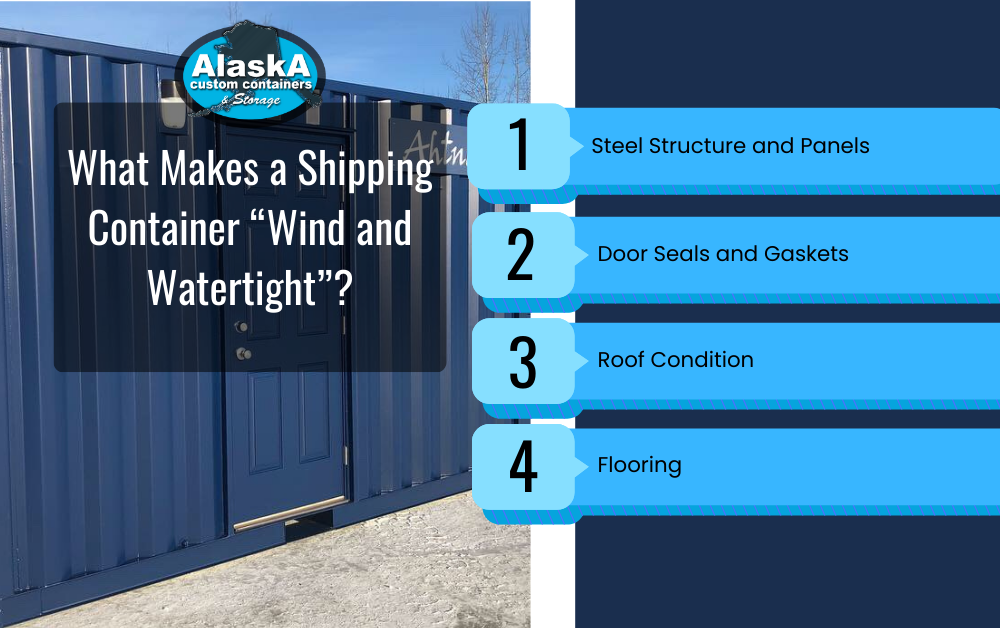
Steel Structure and Panels
- Solid steel walls and roof
- No structural holes or severe corrosion
- Dents may be present, but no breaches
Door Seals and Gaskets
- Rubber door gaskets are intact
- Doors close fully and evenly
- Locking bars engage properly
Damaged seals are one of the most common causes of water intrusion.
Roof Condition
- No pinholes or cracks
- No deep dents that hold standing water
- No visible daylight from inside
The roof takes the most abuse during transport, so it deserves close inspection.
Flooring
- Solid marine-grade plywood
- No soft spots or rot
- No visible mold or water damage
A strong floor is just as important as sealed walls.
Signs a Shipping Container Is NOT Wind and Watertight
Some issues immediately disqualify a container from being considered WWT. Watch for these red flags.
- Visible holes in walls or roof
- Daylight shining through panels
- Missing or cracked door gaskets
- Rust that has eaten through steel
- Water stains or pooling inside
- Warped doors that do not seal
If you see any of these issues, the container will not reliably protect stored items from moisture or weather.
How to Inspect a Shipping Container for Wind and Watertight Condition
If you’re inspecting a container in person, a few simple checks can tell you a lot.
Exterior Inspection
- Walk around the container
- Check walls, roof edges, and corners
- Look for rust-through or reliable patching
Interior Daylight Test
- Close the doors
- Stand inside during daylight
- Look for light coming through walls or roof
Any visible light usually means water can get in.
Door Operation Test
- Open and close doors fully
- Check for smooth movement
- Ensure doors seal evenly against the frame
Seal Inspection
- Examine rubber gaskets around doors
- Look for cracks, gaps, or missing sections
Floor Check
- Walk across the floor
- Press on suspicious areas
- Look for softness or discoloration
Professional suppliers inspect these areas before listing containers as WWT, which helps buyers avoid surprises.
Why Wind and Watertight Matters for Storage and Projects
A wind and watertight shipping container protects more than just items inside. It also protects your investment.
WWT containers help:
- Keep tools and equipment dry
- Prevent rust and corrosion
- Reduce mold and mildew risk
- Preserve building materials
- Support future modifications or conversions
For long-term storage or planned customization, starting with a WWT container saves time and money later.
WWT vs Cargo-Worthy vs One-Trip Containers
Understanding container grades helps buyers choose the right option.
Wind and Watertight (WWT)
- Used container
- Sealed against weather
- Ideal for storage and projects
- Most cost-effective option
Cargo-Worthy
- Meets shipping standards for transport
- Structurally sound for stacking and loading
- Often costs more than WWT
- Not always necessary for storage
One-Trip
- Like-new condition
- Minimal wear and rust
- Highest price point
- Best for high-visibility or long-term builds
Choosing the right grade depends on how the shipping container will be used.
How Alaska Custom Containers Ensures WWT Quality
Not all sellers inspect containers the same way. Alaska Custom Containers carefully evaluates containers before labeling them wind and watertight.
Their process focuses on:
- Structural integrity
- Door function and seals
- Roof condition
- Floor strength
- Honest condition grading
Customers receive guidance on whether a WWT container fits their needs or if another option makes more sense. This transparency helps buyers avoid containers that look acceptable but fail in real-world use.
Understanding WWT Means Better Buying Decisions
“Wind and watertight” is more than a label. It’s a performance standard that directly affects how well a shipping container protects what you store or build inside it.
By knowing what to look for and how to inspect a container properly, you can make a smarter purchase and avoid costly issues down the road.
If you’re unsure whether a shipping container truly meets wind and watertight standards, Alaska Custom Containers can help you choose the right container for your needs and your plans.
Reach out with questions or request a quote to get started.