Heavy equipment is one of the biggest investments on any job site or property. Whether it’s generators, compact machinery, attachments, or specialized tools, replacing damaged equipment is expensive and avoidable.
The challenge is storage. Leaving equipment exposed to weather, theft, or poor conditions can quickly lead to rust, wear, and costly repairs. That’s why more contractors and property owners are turning to a shipping container for secure, reliable storage.
A shipping container provides a controlled, durable space that protects equipment from the elements while keeping everything organized and easy to access.
In this guide, we’ll walk through how to safely store heavy equipment in a shipping container, how to set it up properly, and what mistakes to avoid.
Why Proper Storage Matters for Heavy Equipment
Heavy equipment is built to handle tough work, but it is not designed to sit unprotected for long periods.
Improper storage can lead to:
- Rust and corrosion from moisture exposure
- Electrical issues caused by humidity
- Premature wear from temperature changes
- Theft or vandalism on unsecured properties
Even short-term exposure can create long-term problems. Over time, these issues reduce performance and shorten the lifespan of your equipment.
Using a shipping container helps eliminate many of these risks by providing a secure and enclosed environment.
Why a Shipping Container Is Ideal for Equipment Storage
A shipping container is designed to protect cargo in harsh conditions, which makes it a strong solution for storing heavy equipment.
Here’s why it works so well:
Security
Steel walls and lockable doors make it much harder for unauthorized access compared to sheds or open storage.
Weather Protection
A wind- and water-tight container keeps rain, snow, and debris out, helping prevent moisture damage.
Durability
Containers are built for heavy loads and long-term outdoor use. They hold up well in demanding environments.
Portability
If your project moves, your container can move with it, making it a flexible storage solution.
Compared to tarps, open yards, or basic sheds, a shipping container offers consistent protection with far less maintenance.
What Equipment Can Be Stored in a Shipping Container
Shipping containers are versatile and can store a wide range of equipment safely.
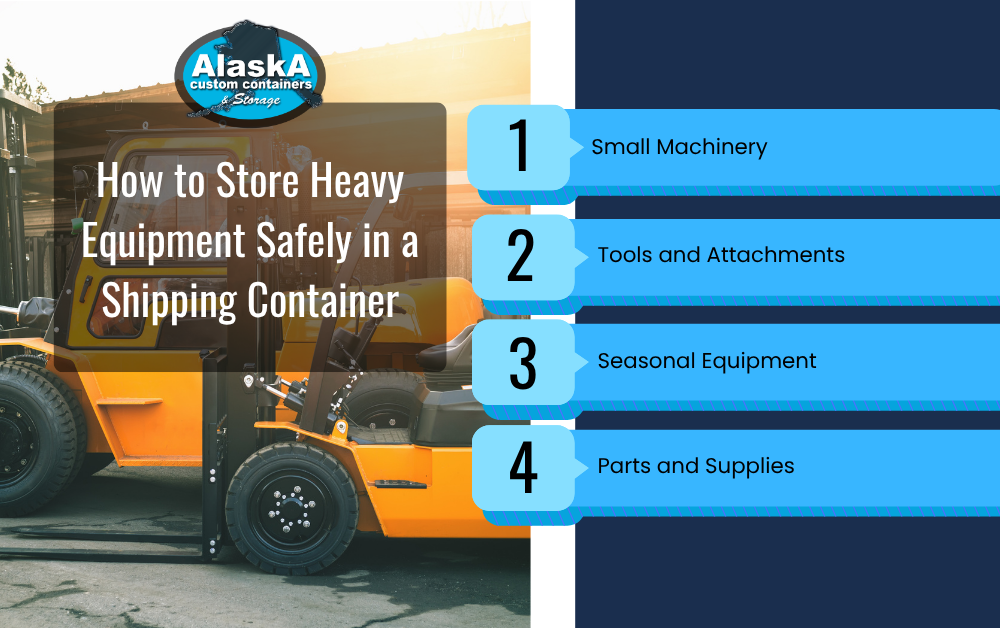
Small Machinery
Items like generators, compactors, and compressors fit easily inside a container and stay protected from the elements.
Tools and Attachments
Buckets, blades, augers, and other attachments can be organized and stored without cluttering your work area.
Seasonal Equipment
Snow removal tools, landscaping equipment, and seasonal gear can be stored when not in use, freeing up space.
Parts and Supplies
Fluids, spare parts, and maintenance tools stay secure and organized, making them easier to access when needed.
Preparing a Shipping Container for Heavy Equipment
Before storing equipment, it’s important to prepare the container properly.
Start with these steps:
- Inspect the container to ensure it is wind and watertight
- Clean the interior to remove debris and dust
- Check the floor for damage or soft spots
Then improve the setup:
- Add ventilation to reduce condensation
- Use pallets or mats to elevate equipment off the floor
- Plan the layout so items are easy to access
Taking time to prepare the container helps prevent damage and keeps everything organized.
Safe Loading and Placement Tips
How you load your equipment matters just as much as where you store it.
Follow these guidelines:
- Distribute weight evenly across the container
- Keep heavier equipment low and centered
- Avoid overloading beyond the container’s capacity
- Use proper ramps or lifting equipment
- Leave enough space to move around safely
Good loading practices prevent stress on the container and reduce the risk of shifting or damage.
Preventing Moisture, Rust, and Damage
Moisture is one of the biggest threats to stored equipment, even inside a container.
To reduce moisture-related issues:
- Ensure airflow inside the container
- Keep equipment elevated off the floor
- Use desiccants or moisture absorbers
- Inspect the container regularly
- Check equipment after major weather changes
Condensation can form when temperatures shift, so managing airflow and moisture is key to long-term protection.
Security Tips for Equipment Storage
Heavy equipment is valuable, which makes security a priority.
To improve security:
- Use heavy-duty locks or lock boxes
- Place the container in a visible location
- Add lighting around the area
- Limit access to authorized users
A shipping container already provides strong protection, but adding a few extra measures helps reduce risk even further.
Common Mistakes to Avoid
Even with a good setup, certain mistakes can lead to problems.
Avoid these common issues:
- Overcrowding the container
- Storing equipment while it is wet or dirty
- Ignoring drainage around the container
- Skipping regular inspections
- Using a damaged or non-sealed container
Simple adjustments can make a big difference in protecting your equipment.
Protect Your Equipment the Right Way
Storing heavy equipment properly is essential for protecting your investment and keeping your projects running smoothly. A shipping container provides a strong, secure, and weather-resistant solution that helps prevent damage, reduce theft, and keep everything organized.
With the right setup and a few smart storage practices, you can extend the life of your equipment and avoid unnecessary costs.
If you’re looking for a reliable storage solution, Alaska Custom Containers can help you choose the right container for your equipment and your property.