Building materials are expensive, and once they’re damaged, there’s usually no fixing them. Moisture, theft, sun exposure, and poor organization can ruin lumber, insulation, metal, and supplies long before a project even starts.
This is why more builders, contractors, and property owners rely on shipping containers to store building materials safely. Containers provide a secure, weather-resistant space that protects materials from the elements while keeping job sites and properties organized.
This guide explains how to use shipping containers effectively for material storage, what to store inside, and how to avoid common mistakes that lead to waste and extra costs.
Why Proper Storage Matters for Building Materials
Improper storage is one of the most common reasons materials get damaged before they’re ever used.
Common problems include:
- Lumber warping from moisture
- Insulation absorbing water and losing effectiveness
- Metal rusting or corroding
- Drywall softening or crumbling
- Theft from unsecured job sites
Leaving materials exposed or stacked under tarps often creates more problems than it solves. Weather changes, snow, rain, and temperature swings can quickly undo careful planning.
Using shipping containers for storage creates a controlled environment that helps preserve materials until they’re ready to be used.
Why Shipping Containers Work for Material Storage
Shipping containers are designed to protect cargo under harsh conditions, which makes them well suited for storing building materials.
Key advantages include:
- Weather protection: Wind- and water-tight construction keeps rain and snow out
- Security: Steel walls and lockable doors deter theft
- Durability: Built for heavy loads and long-term outdoor use
- Portability: Containers can move as projects change locations
Compared to sheds, tarps, or open storage, containers offer consistent protection with far less maintenance.
What Building Materials Can Be Stored in a Shipping Container
Shipping containers work well for a wide range of building materials when stored correctly.
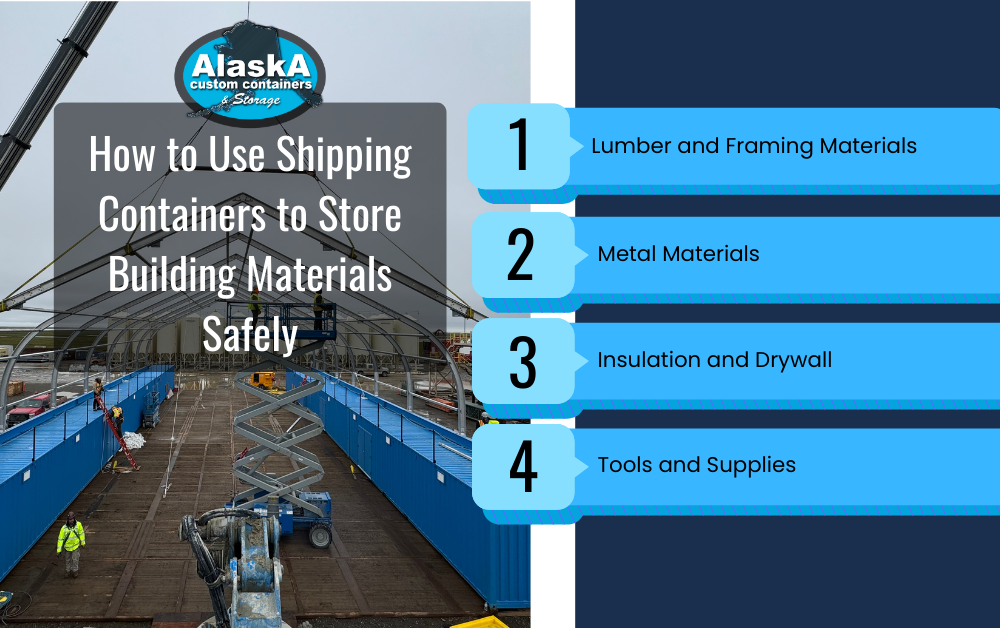
Lumber and Framing Materials
Lumber stays straighter and cleaner when kept dry and elevated. Containers protect wood from rain, snow, and direct sun exposure, which helps prevent warping and mold.
Metal Materials
Steel framing, roofing panels, fasteners, and hardware store better in a sealed environment. Containers help reduce rust and corrosion when moisture is controlled.
Insulation and Drywall
These materials are especially sensitive to moisture. Containers offer protection from rain and snow, which is critical for keeping insulation effective and drywall usable.
Tools and Supplies
Paint, adhesives, sealants, hardware, and power tools all benefit from secure, enclosed storage that reduces exposure and theft.
Preparing a Shipping Container for Material Storage
Before loading materials, it’s important to prepare the container properly.
Start by:
- Inspecting the container to ensure it is wind and watertight
- Cleaning out debris, dust, and residue
- Checking the floor for softness or damage
To improve storage conditions:
- Add ventilation to reduce condensation
- Use moisture absorbers or desiccants
- Place pallets or racks on the floor to elevate materials
- Plan the layout before loading anything inside
A little preparation upfront helps prevent damage later.
Organizing Building Materials Inside a Shipping Container
Good organization protects materials and saves time on the job.
Helpful organization tips include:
- Group materials by type and use
- Store heavier items low for stability
- Use shelving or racking for smaller items
- Leave clear walkways for safe access
- Label zones for quick identification
Avoid stacking materials randomly. Disorganized storage leads to crushed materials, hidden damage, and wasted time.
Preventing Moisture, Mold, and Rust
Moisture control is the most important factor in safe material storage.
To reduce moisture risks:
- Ensure proper airflow inside the container
- Avoid storing materials directly on the floor
- Use pallets, racks, or dunnage
- Inspect seals and doors regularly
- Check after major weather events
Condensation can form when warm air meets cold steel. Managing airflow and keeping materials elevated helps prevent moisture from collecting where it causes damage.
Security Tips for Storing Materials on Job Sites or Properties
Building materials are valuable and often targeted for theft.
To improve security:
- Use heavy-duty locks or lock boxes
- Place the container in a visible location
- Add lighting near doors
- Limit access points
Shipping containers already provide a strong security advantage. Adding basic security measures further reduces risk.
Common Storage Mistakes to Avoid
Even with a container, poor storage habits can cause problems.
Avoid these mistakes:
- Placing materials directly on the container floor
- Overfilling and blocking airflow
- Mixing materials that react poorly together
- Ignoring drainage around the container
- Failing to inspect materials periodically
Simple adjustments can prevent costly losses.
Protect Your Materials, Protect Your Investment
Building materials represent a major investment, and protecting them should be part of every project plan. Shipping containers provide a reliable way to store materials safely, securely, and efficiently.
With proper preparation and organization, a container can protect lumber, insulation, metal, and supplies from weather, theft, and damage throughout the life of a project.
If you’re planning material storage and want help choosing the right container setup, Alaska Custom Containers can help you select a solution that fits your needs and keeps your materials protected.