When people need extra storage, a shed is usually the first thing that comes to mind. Sheds feel familiar. They’re easy to picture and widely available. But over time, many property owners realize that sheds don’t always hold up the way they expect, especially when weather, security, and long-term use come into play.
That’s why more people are turning to shipping containers instead.
Built from steel and designed to withstand extreme conditions, shipping containers offer a level of durability and protection that most sheds simply can’t match. If you’re storing tools, equipment, materials, or seasonal gear, the difference becomes obvious pretty quickly.
This comparison breaks down why shipping containers often outperform sheds when it comes to storage, and when each option makes sense.
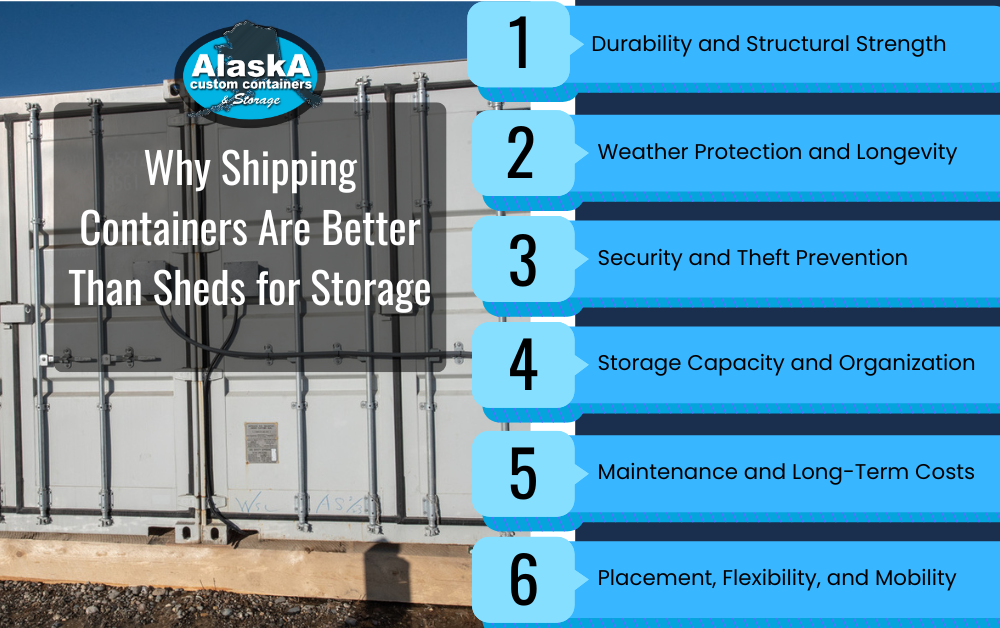
Durability and Structural Strength
One of the biggest differences between sheds and shipping containers comes down to how they’re built.
Most sheds are made from wood, lightweight metal panels, or composite materials. While they work for basic storage, they aren’t designed to handle heavy loads, high winds, or repeated exposure to harsh conditions.
Shipping containers, on the other hand, are built from corrugated steel and reinforced at the corners. They were designed to be stacked, lifted, and transported across oceans while carrying heavy cargo. That strength translates directly into long-term storage reliability.
Over time, sheds can warp, sag, or shift. Containers hold their shape. They don’t flex under snow load, and they don’t weaken as easily from moisture or temperature changes.
Weather Protection and Longevity
Weather is often what exposes the limits of a shed.
Shed roofs can leak. Walls can swell or rot. Fasteners loosen, and seams open up. After a few seasons of rain, snow, and freeze-thaw cycles, many sheds require repairs or replacement.
Shipping containers are wind- and water-tight by design. Steel walls and sealed doors keep rain, snow, and drifting moisture out. When properly maintained, a container can sit outdoors for decades with minimal deterioration.
For year-round storage, especially in areas with harsh winters or heavy rainfall, containers provide consistent protection that sheds struggle to match.
Security and Theft Prevention
Security is another area where sheds often fall short.
Most sheds rely on thin walls and basic locks. A determined intruder doesn’t need much time or effort to break in. For property owners storing tools, equipment, or materials, that’s a real concern.
Shipping containers offer a much higher level of security. Steel walls are difficult to breach, and heavy doors can be fitted with reinforced locking systems. Even without upgrades, containers are far more resistant to forced entry than typical sheds.
For remote properties or job sites, this added security alone is often enough to justify choosing a container over a shed.
Storage Capacity and Organization
Sheds are often smaller than people expect once items start going inside. Sloped walls, roof supports, and limited height can reduce usable space.
Shipping containers provide a rectangular, open interior that’s easy to organize. Shelving, racks, lighting, and work surfaces can be added to maximize every square foot.
Another advantage is scalability. If your storage needs grow, adding another container is often simpler than expanding or replacing a shed. Containers also come in multiple sizes, making it easier to choose something that fits both your current and future needs.
Maintenance and Long-Term Costs
At first glance, sheds can seem like the cheaper option. But long-term costs tell a different story.
Sheds often require:
- Roof repairs
- Replacement panels
- Repainting or sealing
- Structural reinforcement
Over time, those costs add up. In many cases, a shed needs to be replaced entirely after several years.
Shipping containers require far less maintenance. Occasional inspections and touch-up paint are usually enough to keep them in good shape. Their lifespan often far exceeds that of a typical shed, making them a better long-term investment for storage.
Placement, Flexibility, and Mobility
Sheds are usually treated as permanent structures. Once built, moving them is difficult and sometimes impossible without damage.
Shipping containers are designed to be moved. They can be relocated if your property layout changes, projects shift, or access improves. This flexibility makes them especially useful for growing properties or changing storage needs.
Containers also perform well on a variety of surfaces. With proper placement, they can sit on gravel, blocks, or pads without the extensive site prep sheds often require.
When a Shed Might Still Make Sense
There are situations where a shed can still be the right choice.
For light storage, decorative purposes, or areas with mild weather and low security concerns, a shed may be sufficient. Smaller yards or locations with strict visual requirements might also favor sheds.
However, for long-term storage, valuable equipment, or harsh conditions, shipping containers consistently outperform sheds in durability, protection, and value.
Built to Last, Built to Protect
When storage needs go beyond lawn tools and seasonal décor, strength and reliability matter. Shipping containers offer a level of durability, security, and weather protection that sheds simply can’t provide over the long term.
For property owners who want storage they don’t have to constantly repair, replace, or worry about, containers are often the smarter choice.
If you’re weighing your options and want storage that’s built to last, Alaska Custom Containers can help you find the right container for your property and your needs.