It happens more often than people expect. A shipping container gets delivered, set in place, and everything seems fine. Then plans change. Maybe you want it closer to a building, further from the road, or on a more level spot. Sometimes access changes, projects evolve, or the container simply ends up in the wrong location.
That usually leads to one simple question: Can you move a shipping container after it’s been placed?
The short answer is yes. A shipping container can absolutely be moved after placement. How easy that move is depends on a few important factors, including size, weight, terrain, and how the container was originally set.
This guide walks through when moving a container is straightforward, when it gets more complicated, and what to consider before trying to relocate one.
If you’re unsure about your setup, Alaska Custom Containers can help you plan the safest and most efficient way to move or reposition your container.
The Short Answer: Yes, Shipping Containers Can Be Moved
Shipping containers are built to be transported. Moving them is part of their design. Even after placement on a property, a shipping container can usually be relocated without issue.
That said, not all moves are equal. Sliding a container a few feet on flat ground is very different from relocating a fully loaded 40ft unit across uneven terrain or in winter conditions.
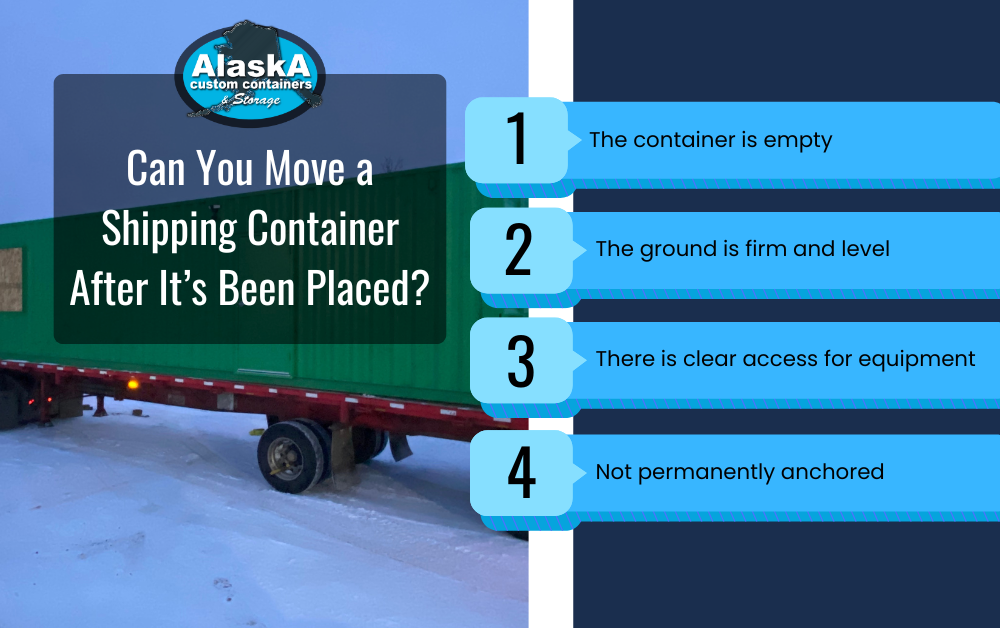
In general, moving a shipping container is easier when:
- The container is empty
- The ground is firm and level
- There is clear access for equipment
- The container is not permanently anchored
Understanding these basics helps set realistic expectations before you attempt a move.
What Determines How Easy a Shipping Container Is to Move
Several factors affect how simple or difficult it is to move a shipping container after placement.
Container Size
A 20ft shipping container is significantly easier to move than a 40ft container. Shorter length and lighter weight make it easier to maneuver with standard equipment.
Weight and Contents
An empty container is far easier to relocate than one filled with tools, materials, or equipment. Moving a loaded container increases risk and limits your options.
Ground Conditions
Firm, level ground allows equipment to operate safely. Soft soil, slopes, snow, or frozen ground can complicate or delay a move.
Original Placement Method
If the container was dropped directly onto the ground, relocation is usually simpler. Containers placed on blocks, pads, or foundations require more planning.
Access for Equipment
Clear access for trucks, cranes, or heavy machinery is critical. Tight spaces or narrow driveways can limit relocation methods.
Common Ways Shipping Containers Are Moved
The method used to move a shipping container depends on distance, terrain, and available equipment.
Tilt-Bed or Roll-Off Trucks
This is one of the most common methods. The truck tilts and slides the container on or off the bed. It works best when there is straight access and enough room to load and unload.
Crane or Boom Truck
Cranes lift the container vertically and reposition it. This method works well for tight areas, obstacles, or precise placement, but it requires professional equipment and planning.
Forklift or Heavy Equipment
Large forklifts or loaders can move containers short distances, especially on job sites. This requires experienced operators and stable ground.
Skidding or Sliding Short Distances
In some cases, containers can be slid or skidded short distances using rollers or beams. This is usually limited to minor adjustments rather than full relocations.
Each method has limits. Choosing the wrong one can damage the container or create safety issues.
Can You Move a Shipping Container Yourself?
In some situations, yes. In many situations, it’s not recommended.
A property owner might move a small, empty shipping container short distances using heavy equipment they already own. However, this carries risks.
Potential issues include:
- Damage to the container frame
- Injury from shifting weight
- Damage to equipment
- Uneven placement
Without the right tools and experience, a DIY move can turn into a costly mistake. For larger containers or complex moves, professional help is usually the safer option.
When Moving a Shipping Container Gets More Complicated
Some situations require extra planning or professional support.
Containers on Foundations or Anchors
If a container is bolted down or placed on a permanent foundation, relocation becomes more involved.
Modified Containers
Containers converted into offices, storage units with electrical, or custom spaces often require disconnecting utilities before moving.
Uneven or Frozen Ground
Winter conditions, snow, ice, or soft spring ground can make relocation unsafe without proper equipment.
Limited Access
Tight spaces, trees, buildings, or slopes may prevent standard trucks from reaching the container.
In these cases, it’s best to pause and plan rather than force a move.
How to Plan Ahead If You Think You’ll Move a Container Later
If there’s even a chance you’ll move a shipping container in the future, planning ahead makes a big difference.
Helpful steps include:
- Placing the container where trucks can access it later
- Using blocks or gravel instead of permanent foundations
- Keeping the container empty or lightly loaded if relocation is likely
- Thinking about seasonal access, especially winter and spring conditions
Smart placement from the start saves time and money later.
When to Call a Professional
It’s time to call a professional if:
- The container is large or fully loaded
- The ground is uneven or frozen
- You need precise placement
- You’re unsure which equipment is required
Professionals understand weight distribution, access requirements, and safe handling. Alaska Custom Containers can help assess your situation and recommend the safest way to move or reposition a shipping container.
If you’re unsure, asking before attempting a move can prevent damage and delays.
Yes, You Can Move It, With the Right Plan
A shipping container does not become permanent just because it’s been placed. In most cases, it can be moved again when plans change or access improves.
The key is understanding what you’re working with and choosing the right approach. Size, weight, terrain, and timing all matter. With proper planning and the right equipment, relocating a shipping container is often straightforward.
If you’re considering moving a container or planning placement with future relocation in mind, Alaska Custom Containers can help you make the right call before you move anything.
Reach out to discuss your setup and get guidance that fits your property and your plans.